
Last updated November 14, 2026
 AC repair
 Furnace & heating
 Heat pumps
 Ductless mini splits
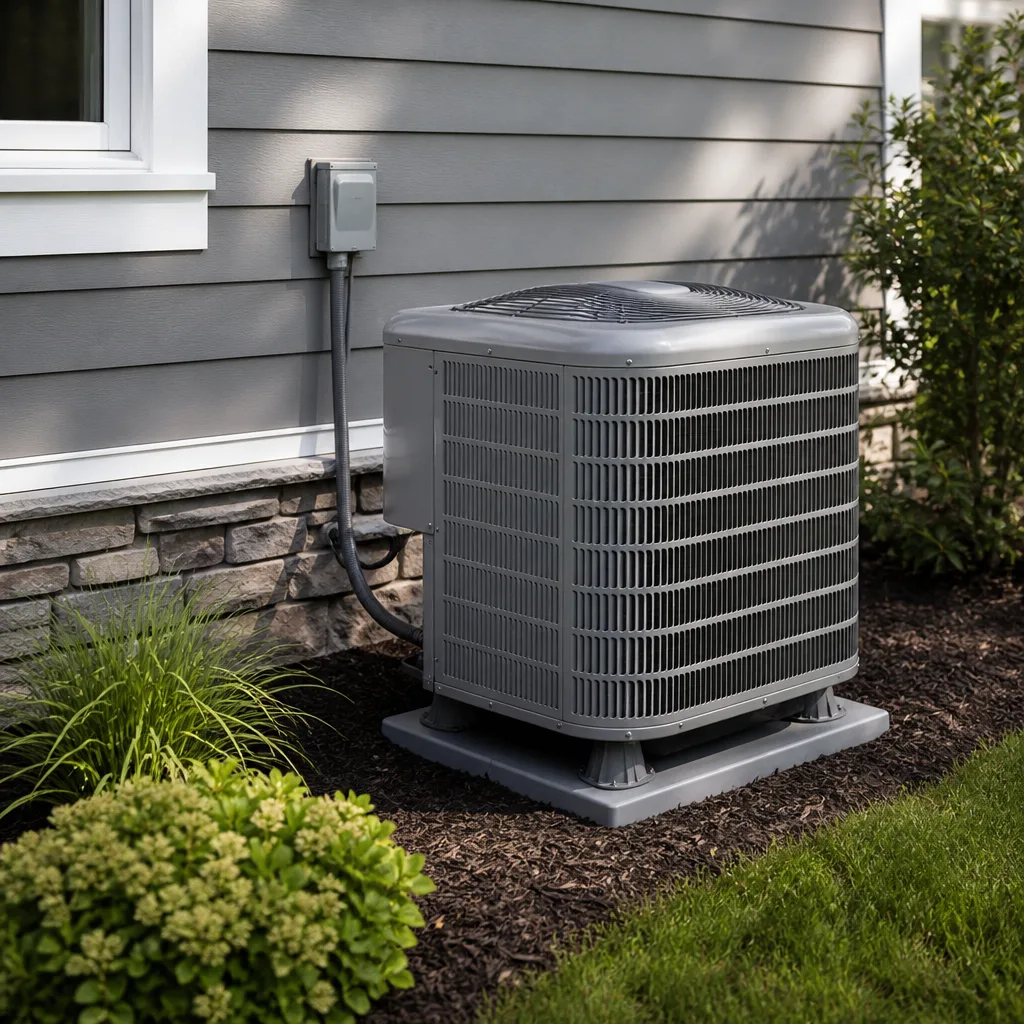 Carrier
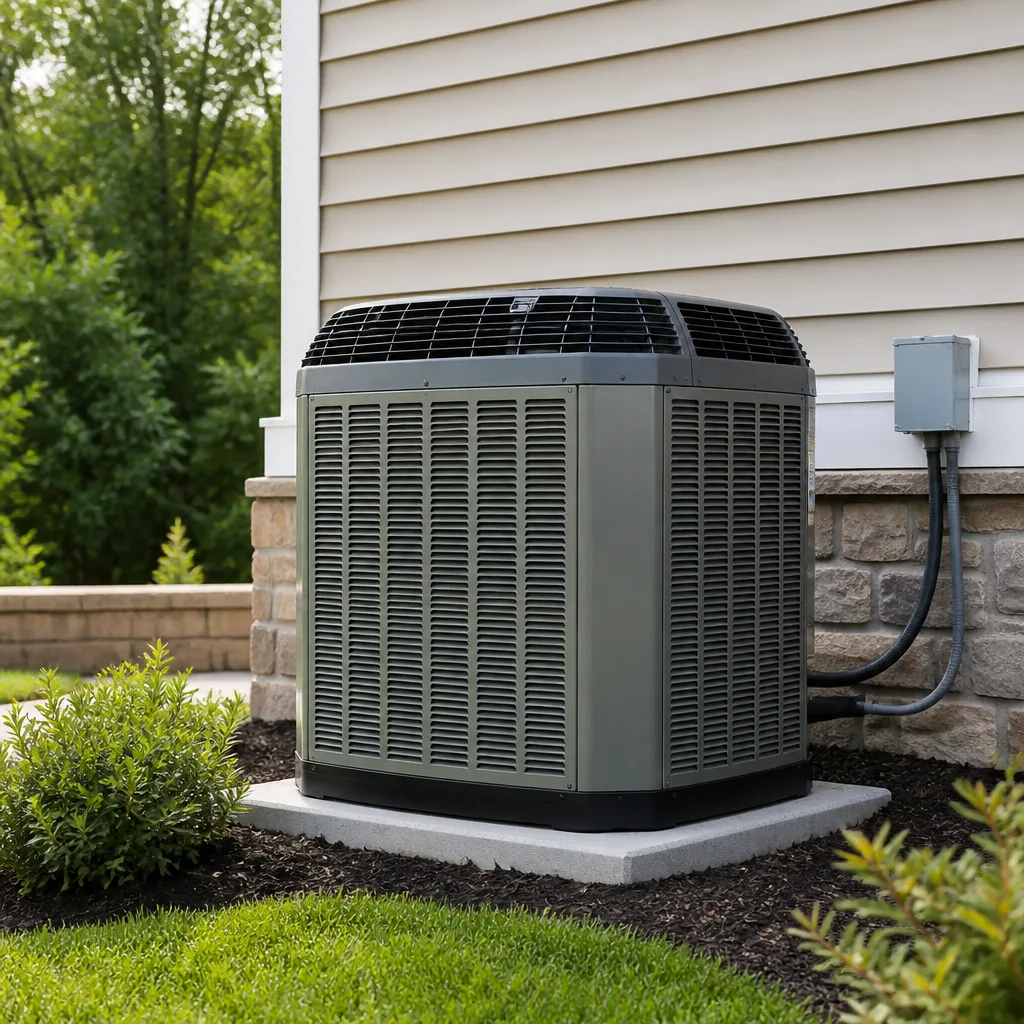 Trane
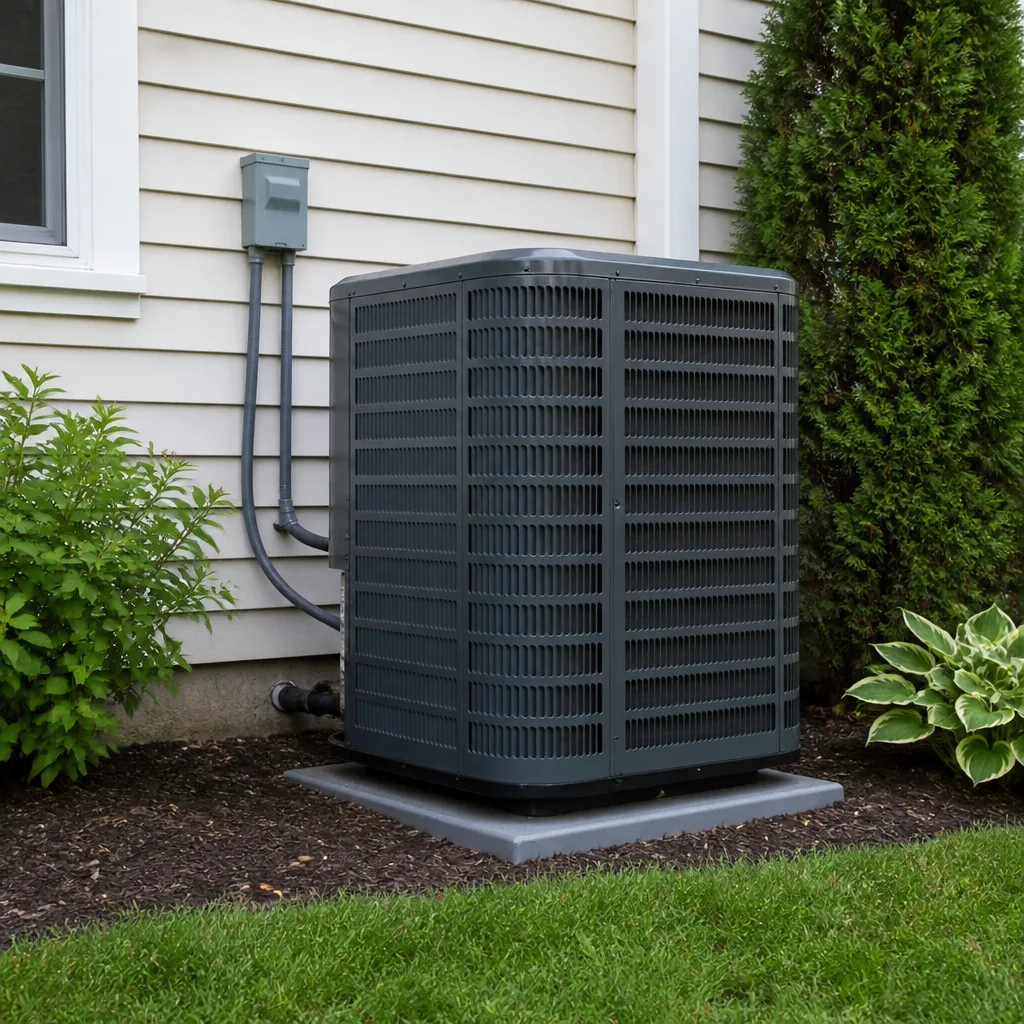 Goodman
Seasonal tune-up and full diagnostic on your Carrier, Trane, or Goodman system - readings shown to you before any repair is proposed
Diagnosis first, numbers second - you approve the repair price before a single part goes in.
Get your free estimateHow to Hire an HVAC Contractor in Plano: A Step-by-Step Guide
In Texas, an HVAC contractor can be fully licensed, EPA-certified, and highly reviewed, and still quote you a replacement unit when a $200 repair would have done the job. That’s not a knock on licensing. It’s a structural reality of the trade: the same model that makes a competent contractor thorough also rewards replacing equipment over repairing it. Most hiring guides stop at credentials and reviews and call it a day. Those checks catch the incompetent. They don’t catch the competent contractor whose business model leans toward new equipment. This guide picks up where the standard advice leaves off, with a Plano-specific process for sorting out who’s genuinely diagnosing your system from who’s selling you one.
Quick Answer
To hire an HVAC contractor in Plano, verify the license through the TDLR database, confirm the contractor is genuinely brand-agnostic, insist on a Manual J load calculation before any replacement quote, and require itemized written estimates instead of verbal ones. Run those four checks and you’ll filter out most of the failure modes that Plano homeowners run into during the high-demand summer stretch.
Styles & brands we work with
- AC repair
- Furnace & heating
- Heat pumps
- Ductless mini splits
- Carrier
- Trane
- Goodman
Table of Contents
- How do you verify an HVAC contractor’s license in Texas?
- Why does brand affiliation matter when you’re getting a quote?
- What is a Manual J load calculation, and why should you demand one?
- What are the red flags specific to Plano’s summer HVAC market?
- What does a legitimate permit and inspection workflow look like in Plano?
- What questions should you ask before signing anything?
- How do you know whether to repair or replace?
- What should you verify after the work is done?
How do you verify an HVAC contractor’s license in Texas?
You verify a Texas HVAC contractor by looking up the company name in the Texas Department of Licensing and Regulation (TDLR) database, which takes about two minutes if you have the license number. Texas runs a tiered system, and the wording on a business card matters. “Registered” is not the same as “licensed,” and the distinction trips up a lot of homeowners. Here’s what the tiers mean in practice.
- Licensed – The company holds a qualifying HVAC contractor license with TDLR. This is the tier you want for any residential service or installation work.
- Registered – A related business registration, sometimes attached to individual technicians working under someone else’s license. It doesn’t necessarily mean the company itself is licensed to contract HVAC work.
- Certified technician – The individual tech holds a TDLR certification. Useful to know, but the company still needs a contractor license for the legal work and contract.
Ask for the company’s TDLR license number before anyone comes out. Any legitimate contractor in Plano will hand it over without hesitation. If they pause, hedge, or tell you it’s “handled through the office,” that’s the answer you needed. Pull the number yourself at tdlr.texas.gov and confirm three things: the license is active, the company name matches what’s on the estimate, and the insurance box is checked.
One more layer: ask whether the technician who arrives is EPA Section 608 certified. Any refrigerant handling requires that certification, and it’s what separates a licensed operation from somebody with a gauge manifold and a truck. This part of vetting catches the incompetent. Keep going, because the next checks catch the competent contractors who are incentivized to oversell.
Why does brand affiliation matter when you’re getting a quote?
Brand affiliation matters because a single-brand dealer has only one product line to sell you. When you’re staring at a failing system and the contractor is a factory-authorized Carrier dealer, the recommendation will be a Carrier replacement, regardless of whether a Bryant system, a Trane system, or a straight repair would serve your house better. That isn’t dishonesty. It’s inventory and dealer incentive doing what it’s designed to do.
The questions below surface whether a contractor is genuinely brand-agnostic or quietly tied to one manufacturer. Ask them plainly.
- “Do you service every major residential brand?” A brand-agnostic contractor will name them and mean it. At Benchmark AC Repair, we’re factory-trained on 9 of the most widely installed residential brands, including Benchmark AC Repair‘s full list of Carrier, Trane, Lennox, Goodman, Rheem, York, Daikin, Bryant, and American Standard.
- “If my existing system is a different brand from the one you install, will you work on it?” The answer should be yes without a pause.
- “Are you a factory-authorized dealer for any one brand?” Not an automatic disqualifier, but you deserve to know which direction the recommendation will lean.
- “Can you give me two or three equipment options at different price points?” A brand-neutral contractor can. A single-brand dealer usually can’t.
- “Does your recommendation change if I tell you budget is tight?” If the answer becomes “well, we could repair it instead,” ask why that wasn’t on the table from the start.
This is the single most useful question set we’ve seen Plano homeowners ask. It shifts the conversation from “what will you sell me” to “what does my house actually need.” If a contractor passes these, you’re in good shape. If they fail, save yourself the headache and keep looking.
What is a Manual J load calculation, and why should you demand one?
A Manual J load calculation is the industry-standard method for figuring out how much heating and cooling your specific house needs, based on square footage, window orientation, insulation, ceiling height, and local climate. It’s the step that determines correct sizing. A contractor who quotes a replacement system by eyeballing your square footage and matching tonnage to what’s currently installed is skipping the calculation. That’s a quiet red flag, because it means the new system might be oversized or undersized for your house.
Oversizing is not a minor issue. A system that’s too big cools the house fast, then shuts off before it has time to pull the humidity out of the air. Plano summers will make that obvious: you end up with a house that hits the set temperature but still feels clammy. Undersizing means the compressor runs constantly and burns out early. Neither outcome is what you paid for.
Here’s how to tell a real load calculation from a hand-wave:
- They ask questions about your house. Square footage, single or two-story, window count and orientation, insulation age, ceiling height, sun exposure.
- They measure and inspect. A real Manual J starts with a walkthrough and measurements, not a conversation at the kitchen table.
- You get a document. A proper load calculation produces a written result with tonnage and equipment match. Ask to see it.
- They discuss ducts. A new system in old, undersized, or leaky ductwork won’t perform, and a thorough contractor will flag that.
If a contractor quotes replacement without ever asking about your windows or insulation, they’re guessing. For AC installation, the load calculation is the difference between a system sized for your home and one sized for a generic house of similar square footage.
What are the red flags specific to Plano’s summer HVAC market?
Plano’s summer market is high-demand, and that’s exactly when the pressure tactics come out. When it’s 100 degrees and every contractor’s phone is ringing, some operations lean on your urgency. Here are the specific flags to watch for, in Plano more than in the shoulder seasons.
- Verbal-only quotes. No written estimate, no itemized breakdown, no signed document. In a busy Plano summer, this is often a sign the contractor is squeezing you in and doesn’t want to be held to a number.
- Refusal to itemize parts vs. labor. A legitimate estimate breaks out what you’re paying for. If the number is one lump sum with no detail, ask for the breakdown and watch the reaction.
- Same-day sign pressure. “The price is only good today,” “the next available install slot is two weeks out if you wait,” and similar. Real pricing doesn’t expire in 24 hours.
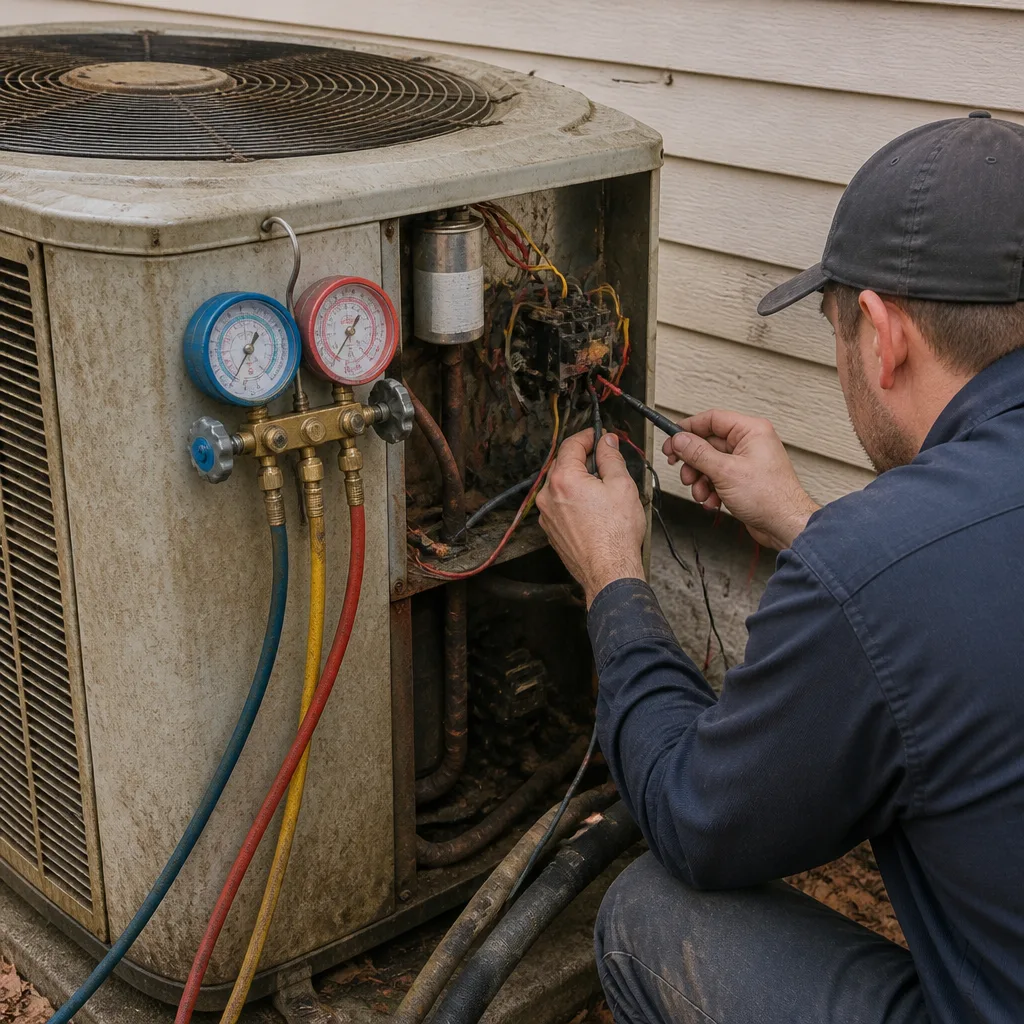
- Diagnosis without testing. A tech who declares your compressor dead based on sound alone, without an amp draw, a capacitor test, and a refrigerant check, is guessing.
- No permit conversation. Any AC replacement or major repair in Plano requires a permit. A contractor who shrugs at the question is cutting corners that create liability for you, the homeowner.
- Cash-preferring, no receipt. Not disqualifying in every case, but a contractor who won’t put anything in writing on a Plano summer emergency shouldn’t be trusted with the equipment inside your house.
The summer surge is real, and we understand why homeowners feel pushed to decide fast. A failed AC in July is a health issue, not an inconvenience. But “I need it fixed today” and “I need to sign this quote today” are two different sentences. Keep them separate and you’ll come out fine.
What does a legitimate permit and inspection workflow look like in Plano?
A legitimate HVAC workflow in Plano starts with the contractor pulling the permit before work begins, scheduling the inspection after, and giving you the paperwork trail. If any step is skipped, the liability for the unpermitted work lands on you when you sell the house or file an insurance claim. That’s not a scare tactic. It’s how building departments work in most Texas cities.
Here’s the sequence to expect on a system replacement or major repair:
- Permit applied for. The contractor files with the City of Plano’s building department before work starts. Ask for the permit number.
- Inspection scheduled. After the install, the city sends an inspector to confirm the work meets code. Confirm with the contractor that the inspection is scheduled, then follow up on the result.
- Signed-off paperwork delivered to you. You should receive documentation that the inspection passed. If you don’t get it, ask.
- Warranty registration. Equipment manufacturers often require registration within a set window to honor the full warranty. Confirm the contractor handles it and passes you the confirmation.
One Plano-specific wrinkle: codes and permit requirements can change, so the answer you got a few years ago from a neighbor may not apply now. Ask the contractor directly what’s required today, and if you want a second source, call the City of Plano building department. It’s a five-minute check that protects your investment.
We handle permits and inspections as a routine part of AC repair and installation work, because that’s the standard for a legitimate operation in Plano. If a contractor you’re evaluating tells you a permit “isn’t really needed” for a replacement, that’s your cue to keep calling.
What questions should you ask before signing anything?
The right questions before signing an HVAC contract in Plano surface the contractor’s structure, not their personality. Here’s the short list we recommend every homeowner run through before they commit.
- “What’s your TDLR license number?” No hesitation, written on the estimate.
- “Are you EPA 608 certified for refrigerant work?” If not, they can’t legally handle refrigerant.
- “Which brands do you service?” You want a name list, not a vague ‘most major brands.’
- “Did you run a Manual J calculation on my house?” If the quote is for a replacement, this is non-negotiable.
- “Can you itemize parts and labor on this quote?” Fair, transparent, and fast to produce if they’re organized.
- “Will you pull the permit, and will I get the inspection paperwork?” Yes is the only answer.
- “What’s the warranty on the equipment and on your labor?” Two separate answers, both written.
- “If I call you for a furnace issue in January, are you the same company?” HVAC contractors who only do AC work will hand you off to a subcontractor. Look for year-round coverage.
Furnace repair is the test that separates a full-service HVAC contractor from a summer-only operation. Plano’s winters are mild but not absent, and a furnace that fails on a cool morning is a problem you want the same company to handle. Single-contact HVAC beats juggling two contractors across seasons.
How do you know whether to repair or replace?
You know it’s time to replace when the repair cost approaches half the cost of a new system, the equipment is well past its expected service life, and the same component keeps failing. Otherwise, repair usually wins. The problem is that the contractor evaluating this may have a financial interest in one answer. Here’s a framework that takes that interest off the table.
- Age of the equipment. If the system is beyond its expected service life, replacement may be the better call, but ask for the reasoning, not just the number.
- Frequency of repair. One failure a year is normal. Three in a single Plano summer is a pattern.
- Cost ratio. If the repair quote is approaching the cost of replacement, replacement wins on pure math.
- Refrigerant type. If your system runs an older refrigerant that’s been phased down, repairs become more expensive over time. Ask directly.
- Efficiency gap. A very old system working harder than a current one may cost you more on every utility bill than a replacement would over several years.
The test here is how the contractor frames the answer. A brand-agnostic contractor will tell you what’s failing, what it costs to fix, and what a replacement would look like, then let you decide. A single-brand dealer has a harder time offering repair when replacement is more profitable. Both may be competent. Only one is structurally neutral.
What should you verify after the work is done?
After the job, verify four things in writing before you consider the contractor finished: the inspection sign-off, the warranty registration, the itemized invoice, and the equipment model and serial numbers. Each one protects you when something goes wrong, especially when the failure point is months or years down the road.
- Inspection sign-off. The city’s pass documentation, matching the permit number you saw before work started.
- Warranty registration confirmation. Manufacturer warranty registered under your name and address.
- Itemized invoice. Parts, labor, permit fees, and any equipment charges, matching the original estimate.
- Equipment serial and model numbers. Written down for your records. You’ll need them for any future warranty claim.
- A written record of what was actually done. What was diagnosed, what was replaced, and what was tested. Skim it against what the technician told you on-site.
If any of those four items doesn’t arrive, follow up. A contractor who did the work properly will produce them without friction. If they don’t, you have a clear signal about what the relationship will look like on the next call.
Common Mistakes to Avoid
- Calling the first name on Google without a license check. In Plano’s high-demand summer, the first result isn’t the best fit. Spend the two minutes in the TDLR database before you spend the day waiting for a tech.
- Accepting a verbal quote on a hot day. When the AC dies in Plano in August, urgency pushes homeowners to accept numbers they’d never accept in April. Get it in writing, every time.
- Skipping the Manual J on a replacement. If a contractor quotes a replacement without measuring your house, they’re guessing at tonnage. That guess costs you money every month for the life of the system.
- Assuming brand coverage by default. A contractor who only works on one brand won’t tell you which brands they don’t handle. Ask the question directly.
- Letting the same-day pressure win. “The price expires today” is a selling tactic, not a fact. The system will still need a fix tomorrow, and the right contractor will quote the same number.
- Ignoring the heating side of the system. Vetting an HVAC contractor only for AC season means another search when the furnace fails. Pick one who handles both.
- Not following up on the inspection. A permit without a scheduled inspection is paperwork that doesn’t protect you. Confirm the sign-off arrives.
See the difference
 Before
 After
 Before
 After
 Before
 After
When to Call a Professional
Call a professional when the system isn’t cooling, isn’t heating, is short-cycling, is leaking water, or is making sounds it didn’t make last season. Refrigerant work requires EPA certification, so anything beyond a filter change or thermostat adjustment is a job for a licensed tech. Electrical components inside the air handler and outdoor condenser carry live voltage and stored charge. If you see sparks, smell burning, or hear the compressor struggling to start, stop and call instead of checking it yourself.
Call Benchmark AC Repair at (833) 488-8546 for a free estimate in Plano. We answer 24/7. Fast dispatch, 7am-7pm. If your system fails at 9pm on a Tuesday, call and we’ll book you into the next dispatch window. Same goes for the furnace side in January. One number, year-round.
Frequently Asked Questions
Look up the company name and license number in the TDLR database at tdlr.texas.gov; the check takes about two minutes. Confirm the license is active, the company name matches the estimate, and the insurance box is checked. Ask for the number before anyone comes out, and treat hesitation as a red flag. Call (833) 488-8546 if you’d like a second opinion on a quote you’ve already received.
Yes, the City of Plano requires a permit for AC replacement and most major HVAC work, and the job should be inspected afterward. Ask your contractor for the permit number before work starts and for the inspection sign-off after. If a contractor tells you a permit isn’t needed, keep looking.
A Manual J load calculation determines the correct size of a new system for your specific house, and skipping it is a common source of oversizing or undersizing. An oversized system cools fast but doesn’t remove enough humidity, which Plano summers make obvious. An undersized system runs constantly and wears out early. Insist on a written load calculation before any replacement quote.
Ask which specific brands they service, whether they’re a factory-authorized dealer for any one manufacturer, and whether they can offer multiple equipment options at different price points. At Benchmark AC Repair, our technicians are factory-trained on Carrier, Trane, Lennox, Goodman, Rheem, York, Daikin, Bryant, and American Standard, and recommendations are based on fit, efficiency, and budget. Call (833) 488-8546 to talk through your system.
Repair is usually the right call unless the repair cost approaches half the cost of replacement, the equipment is well past its service life, or the same component has failed repeatedly. A structurally neutral contractor will walk you through both options without pushing one. Get a written estimate on the repair and the replacement side by side, then decide against the same number on both pages.
Yes, a full-service HVAC contractor handles both sides of the system, which saves you from vetting a second company when the furnace fails. Ask directly: “Do you do furnace work, or will you hand me off?” The best answer is the name of the same company you already vetted for cooling. Call (833) 488-8546 to confirm coverage on your specific equipment.
The Bottom Line
The standard hiring checklist – license, insurance, reviews – catches the incompetent contractor. It doesn’t catch the competent contractor whose business structure leans toward selling you equipment you don’t need. So run the deeper checks: verify the TDLR license yourself, put every quote in writing, demand a Manual J load calculation before any replacement, ask which brands the company actually services, and confirm the permit and inspection workflow before work starts. Those five steps are the difference between a good HVAC decision in Plano and an expensive one you regret every month for the next fifteen years. Whatever system you have, we know it.
Call Benchmark AC Repair at (833) 488-8546 for a free estimate. We answer 24/7. Fast dispatch, 7am-7pm, Sunday through Friday. We work on your brand, and we’ll tell you the right fix, not the fastest upsell.
Written by the team at Benchmark AC Repair.