
Last updated November 14, 2026
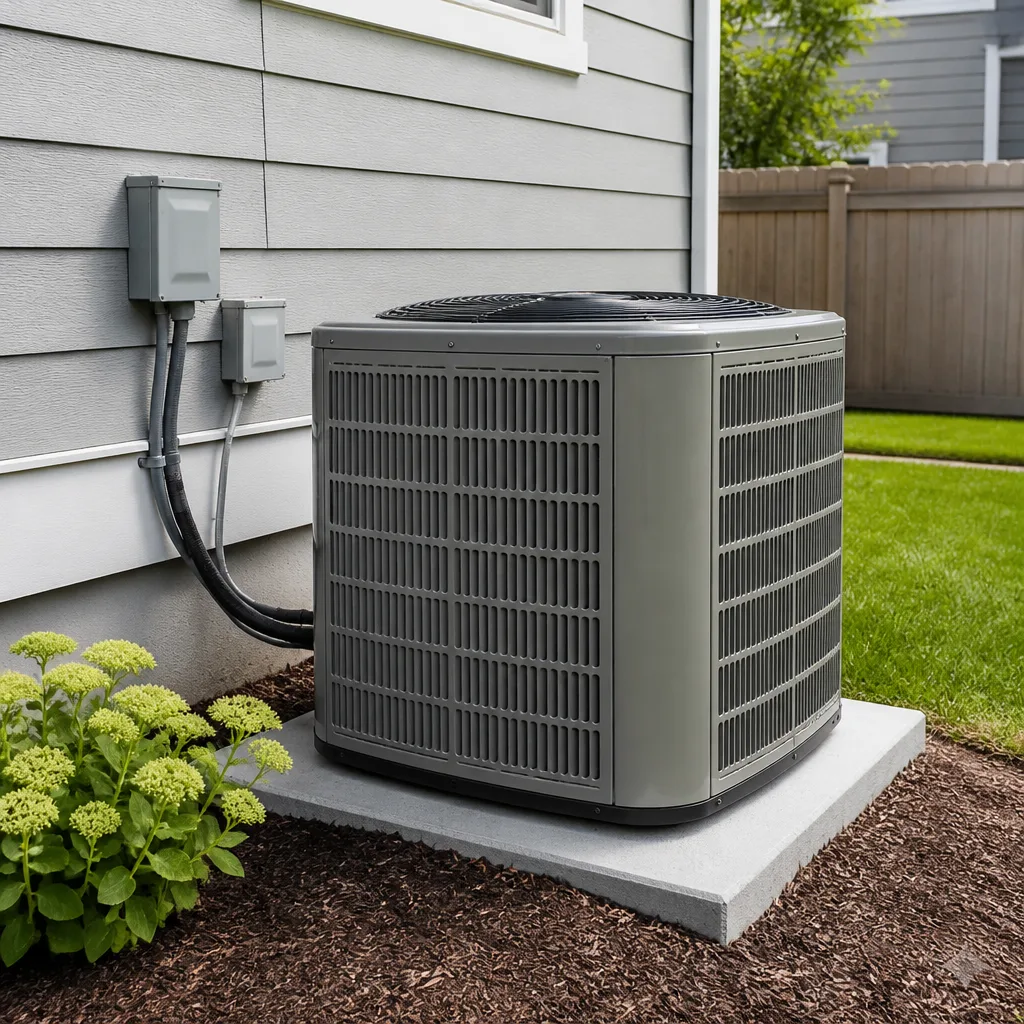 AC repair
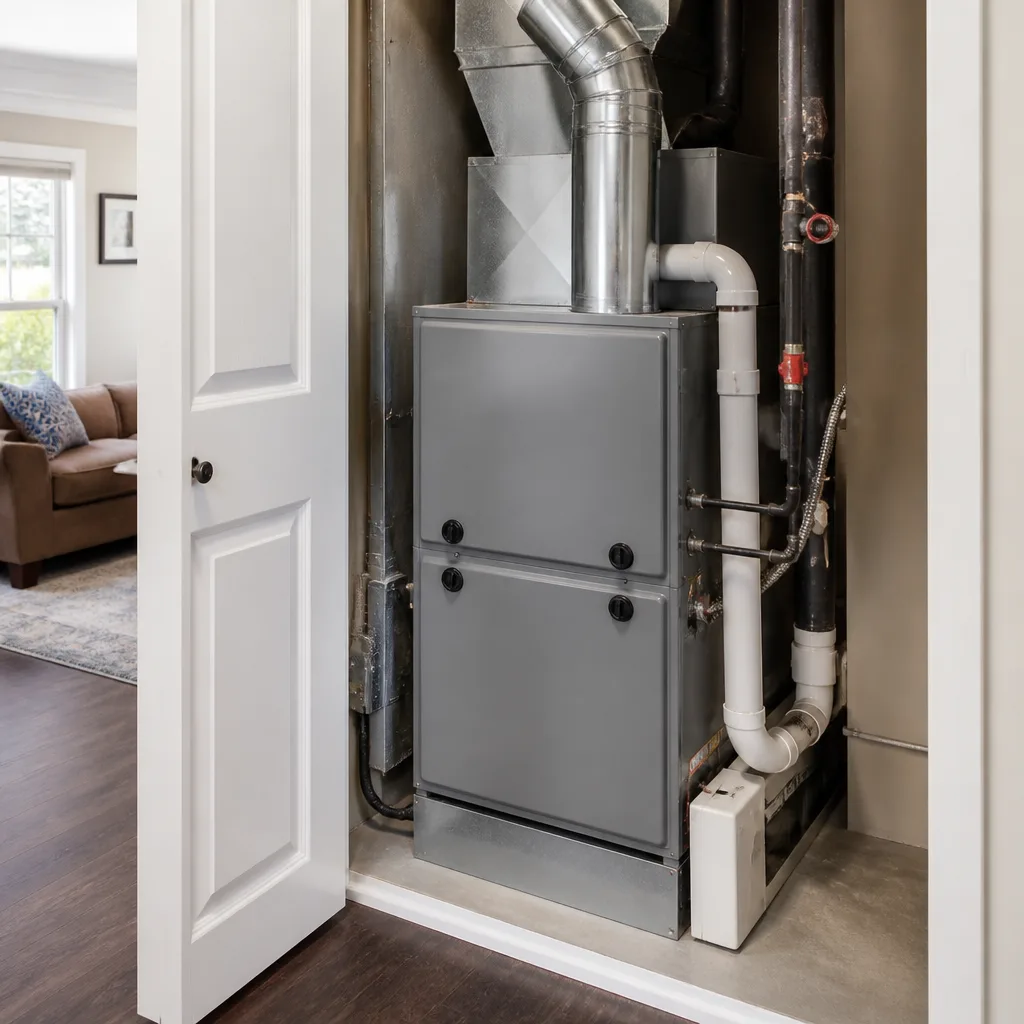 Furnace & heating
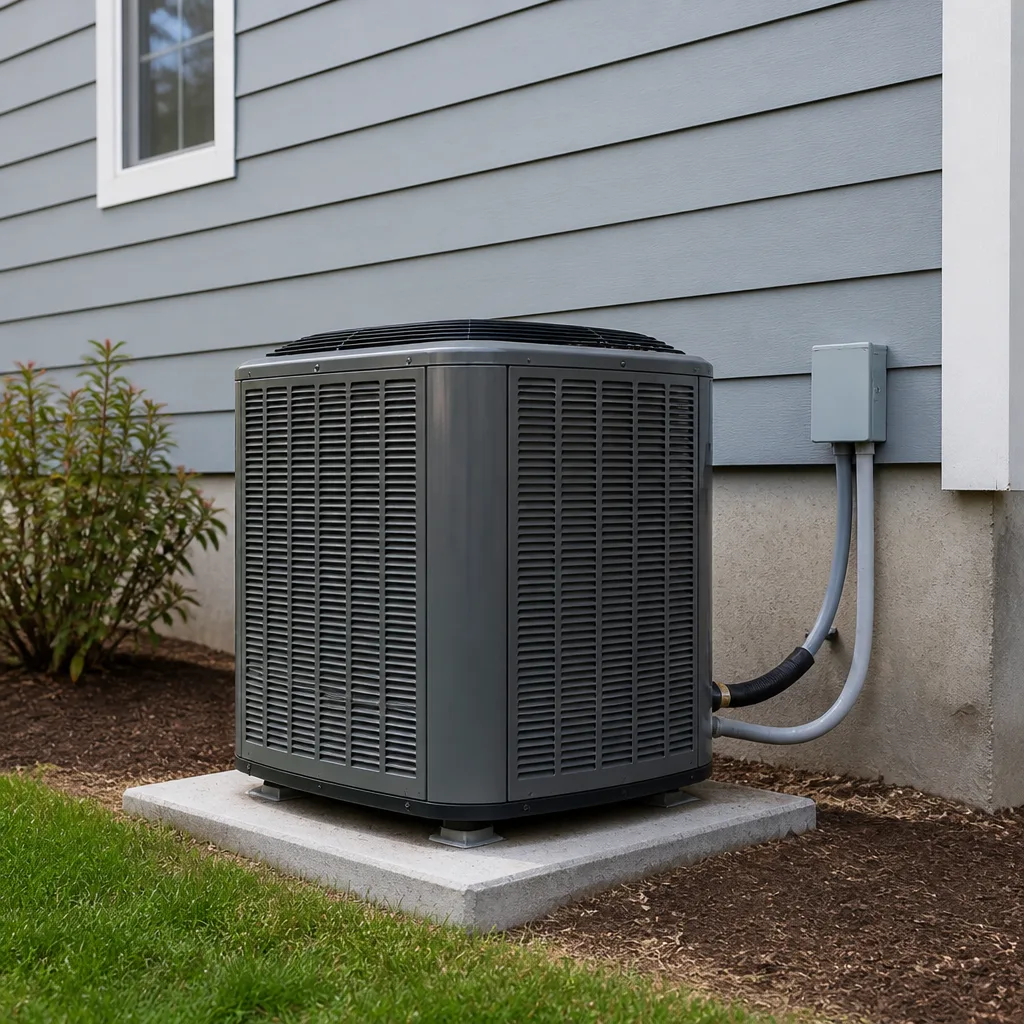 Heat pumps
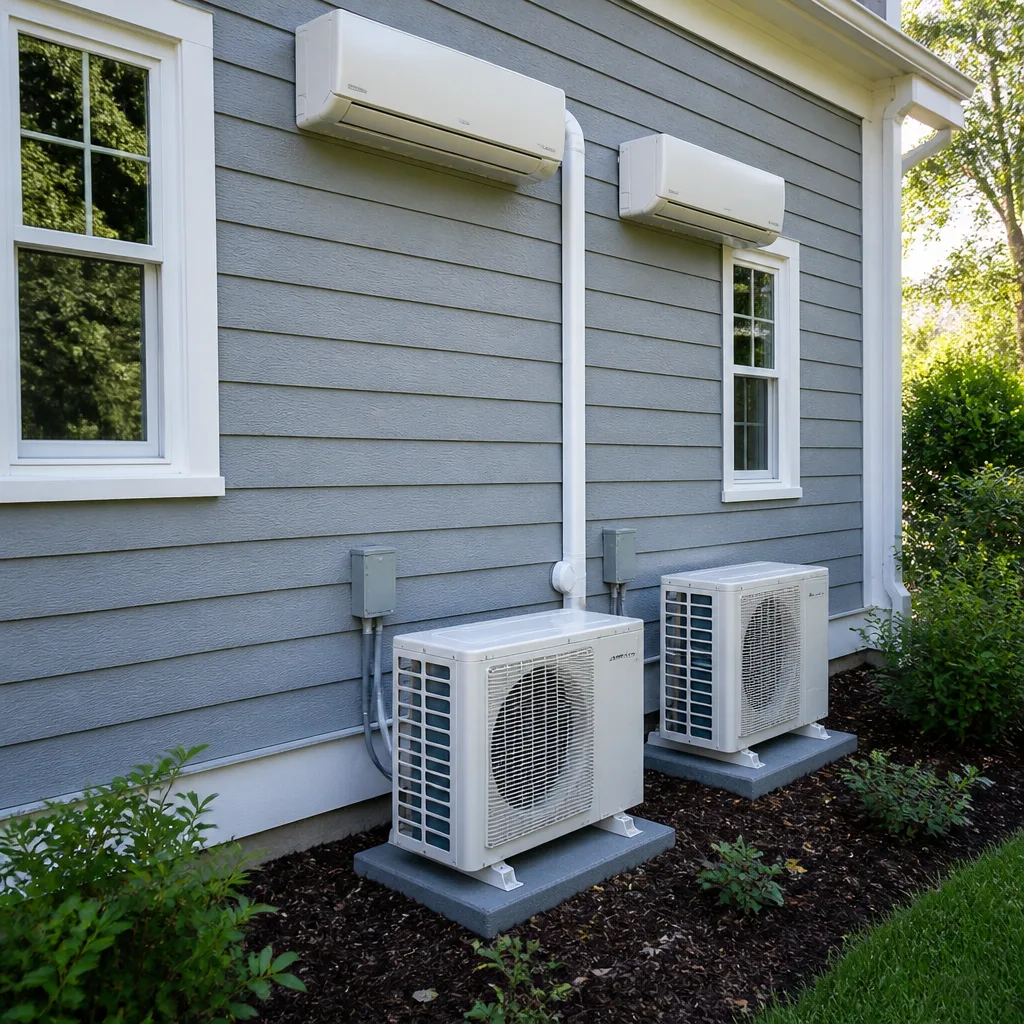 Ductless mini splits
 Carrier
 Trane
 Goodman
Seasonal tune-up and full diagnostic on your Carrier, Trane, or Goodman system - readings shown to you before any repair is proposed
Diagnosis first, numbers second - you approve the repair price before a single part goes in.
Get your free estimateAC Repair Maintenance Checklist for Plano Homeowners
The emergency AC call that defines a North Texas summer often isn’t a dead compressor. It’s a clogged condensate drain line that backs up, trips the float switch, and shuts the system down on the hottest afternoon of the year. A ten-dollar flush in March would have prevented it. Yet almost every generic maintenance checklist buries that item at the bottom, under “check air filter” and “clean coils.” This guide reorders the work around how systems actually fail in Plano, so you spend your effort where it counts. You’ll learn the right timing for each task, which jobs you can handle yourself, which ones require a certified technician under Texas law, and how to log baseline readings before peak load hits.
Quick Answer
The right AC maintenance checklist for Plano starts with flushing the condensate drain in March, before spring humidity climbs, then moves to coil cleaning timed around cottonwood and cedar pollen, refrigerant line insulation inspection on the sun-exposed exterior run, monthly filter changes, and a licensed tune-up that captures baseline amperage and temperature split readings in spring. Doing the tasks in that order prevents the failures that dominate local service calls in June.
Styles & brands we work with
- AC repair
- Furnace & heating
- Heat pumps
- Ductless mini splits
- Carrier
- Trane
- Goodman
Table of Contents
- Why the Condensate Drain Flush Belongs in March
- Coil Fouling and Plano’s Pollen Calendar
- Auditing Refrigerant Line Insulation in West Texas Sun
- Filters, Blowers, and Airflow Basics
- Logging Baseline Amperage and Temperature Split
- DIY Tasks vs. EPA 608 Work in Texas
- A Month-by-Month Plano Maintenance Calendar
- Common Mistakes to Avoid
Why the Condensate Drain Flush Belongs in March
Plano’s spring humidity spike arrives before most homeowners think about cooling. A central system pulls gallons of water out of the air each day in cooling season, and every drop has to leave through a small PVC condensate drain line. Over winter, that line collects dust, algae, and the occasional insect nest. When the first humid week of spring hits, the line clogs, water backs up into the drain pan, and the float switch shuts the system off to prevent an overflow.
Generic checklists tell you to flush the drain in fall. That misses the point. By fall you’ve already survived the worst of the load. The flush has to happen in March, before Plano’s humidity climbs, so the line is clear when the system starts pulling real moisture. Ask us and we’ll tell you the same thing: the March flush is the single highest-value maintenance task of the year.
Here’s how the flush works, and what a trained technician looks for on the same visit:
- Locate the exterior drain termination (usually near the outdoor condenser unit) and the indoor trap.
- Pour a cup of distilled white vinegar down the access port to break up algae growth. Some techs use a wet/dry vac on the exterior termination to pull debris out.
- Check the float switch by lifting it manually to confirm the system shuts down as designed.
- Inspect the drain pan for rust, standing water, or hairline cracks.
- Confirm the trap has a proper water seal so sewer gas doesn’t back into the air handler.
Most Plano homes built in the 1990s and 2000s have a condensate pump rather than a gravity drain, because the air handler often sits in an attic or closet without slope to the exterior. Those pumps fail quietly. If you hear the pump cycling constantly, or see water in the secondary pan, it’s time to have it checked rather than wait for a shutdown. If a system does shut down on a humid afternoon, that’s usually a fast diagnostic and repair rather than a replacement conversation. Our AC repair team handles drain and float switch calls regularly through the season.
Coil Fouling and Plano’s Pollen Calendar
Coils foul at a predictable rate in Plano once you account for the local pollen cycle. Cottonwood fluff, cedar pollen, and general lawn dust combine to coat the outdoor condenser coil faster than the generic manufacturer interval suggests. A coil that’s ten percent fouled can lose meaningful capacity, and you’ll feel it as “the AC just isn’t keeping up” before the system ever fails outright.
What makes coil maintenance tricky is that the manufacturer’s manual assumes a national average. Plano’s specific pollen calendar recommends a different cleaning cadence:
- March through April: cedar and early spring tree pollen. Light rinse of the outdoor coil and a check for cottonwood fluff starting to collect on the fins.
- May through June: cottonwood season is at its peak. The condenser coil needs a real cleaning (not just a garden hose spray) once cottonwood has visibly coated the fins.
- July through August: peak load. The coil should be clean and dry going into this window. Any fouling at this point costs you efficiency when it matters most.
- September through November: fall debris (leaves, grass clippings) collects on the outdoor unit. A pre-winter rinse prevents the debris from sitting on the coil through the heating season.
The indoor evaporator coil is a different story. It sits inside the air handler, behind the filter, and fouls based on filter quality, airflow, and how well the home is sealed. If you keep a clean filter in place, the indoor coil usually only needs inspection and a light cleaning every couple of years. If you’ve skipped filters, the coil could be matted with dust and mold, which means professional cleaning. That indoor coil work is best left alone until a technician confirms it actually needs it. We service most major residential brands, so whether your system is a Benchmark AC Repair call for a York, a Daikin, a Bryant, or an American Standard setup, the coil cleaning process is the same.
One more thing on coils: don’t pressure-wash the outdoor coil with a full-force nozzle. The fins are soft aluminum and bend easily. A low-pressure garden hose rinse plus a proper coil cleaner, applied the way the manufacturer specifies, does the work without crushing the fins.
Auditing Refrigerant Line Insulation in West Texas Sun
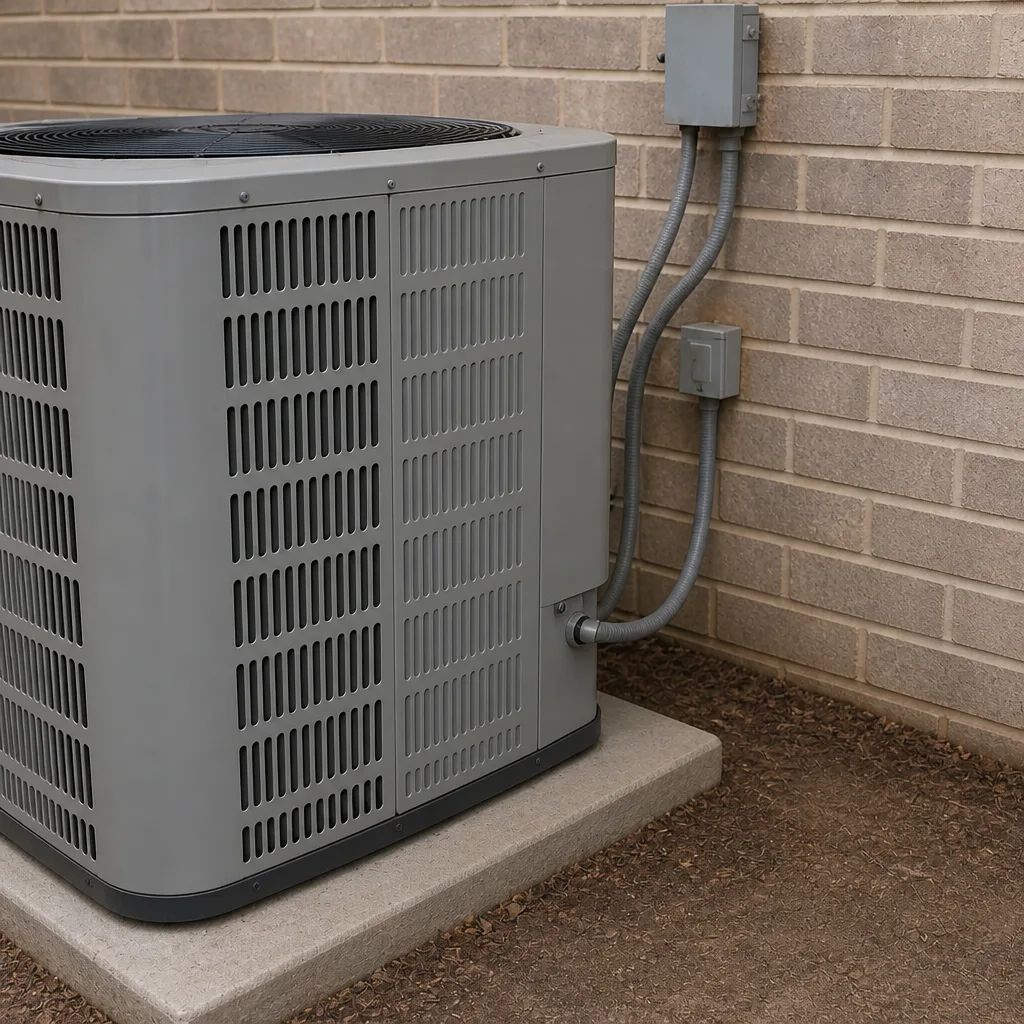
The insulated copper line set that runs from your outdoor unit to the indoor air handler is one of the most overlooked parts of the system. In most of Plano, that line runs along an exterior wall or through the attic, exposed to weeks of direct sun and hundred-plus-degree air temperatures. The insulation jacket degrades faster here than the manufacturer’s rated lifespan suggests, because UV exposure and thermal cycling do more damage than the material was tested against.
Degraded insulation means the suction line absorbs heat before the refrigerant gets back to the compressor. That forces the compressor to work harder to cool the same house. It’s not a catastrophic failure; it’s a slow efficiency leak. A pre-season audit is a fifteen-minute visual check:
- Walk the exterior run and look for sun-cracked, brittle, or missing insulation.
- Check the elbows and fittings for gaps where the insulation has pulled back.
- Look at any section exposed to direct afternoon sun and see if the jacket has gone chalky or powdery.
- Confirm the insulation is rated for outdoor use (usually a UV-resistant jacket, not interior-only wrap).
- Note any section where you can feel cold pipe under bare fingers – that’s refrigerant heat absorption you’re paying for.
Re-wrapping a degraded line set is straightforward but requires care: the old jacket has to come off, the copper has to be inspected for corrosion or pinholes, and the new insulation has to seal at the fittings. This is a job worth doing right in April, before the load arrives. If the copper itself is damaged, that’s a refrigerant-side issue that requires a certified technician, not a DIY fix. Our AC installation work includes full line set evaluation, so if you’re replacing a system we look at the run at the same time.
Filters, Blowers, and Airflow Basics
Filter changes are the most repeated advice in HVAC, and still the most under-executed. The reason it matters so much in Plano is that a restricted filter does more than reduce airflow: it drops static pressure, which raises blower motor amperage, which shortens motor life. A clogged filter is the cheapest way to make a compressor work harder than it was designed to.
The right interval depends on your home and your filter:
- Standard 1-inch pleated filters: every 30 days during cooling season in Plano. If you have pets or the home is near a busy road, every three weeks.
- Media cabinet (4-5 inch) filters: every three to six months. These have more surface area, so they last longer.
- Washable electrostatic filters: rinse monthly during heavy use, follow the manufacturer on drying time before reinstalling (a wet filter breeds mold).
Blower and air handler maintenance extends beyond the filter. Dust accumulates on the blower wheel blades, which unbalances the wheel and produces a subtle vibration you might not notice until it becomes a noise. A technician who’s opening the air handler for a tune-up should clean the blower wheel, check the motor capacitor, and confirm the drain pan and secondary pan are dry. These are checks that belong in a spring tune-up rather than a homeowner DIY schedule.
One pattern we see repeatedly across Plano: homeowners upgrade to a high-MERV filter hoping for cleaner air, and then fight airflow problems all summer. A high-MERV filter is only useful if the system’s blower was designed for that static pressure. If your system wasn’t commissioned for it, a lower MERV filter with more frequent changes is usually the better answer.
Logging Baseline Amperage and Temperature Split
This is the item almost no homeowner-owned checklist includes, and it’s the one that separates a real maintenance program from a filter-and-hope routine. Baseline readings taken in spring, before peak summer load, give you a performance benchmark. When something changes mid-season, you have a reference point instead of a guess.
The two readings that matter most:
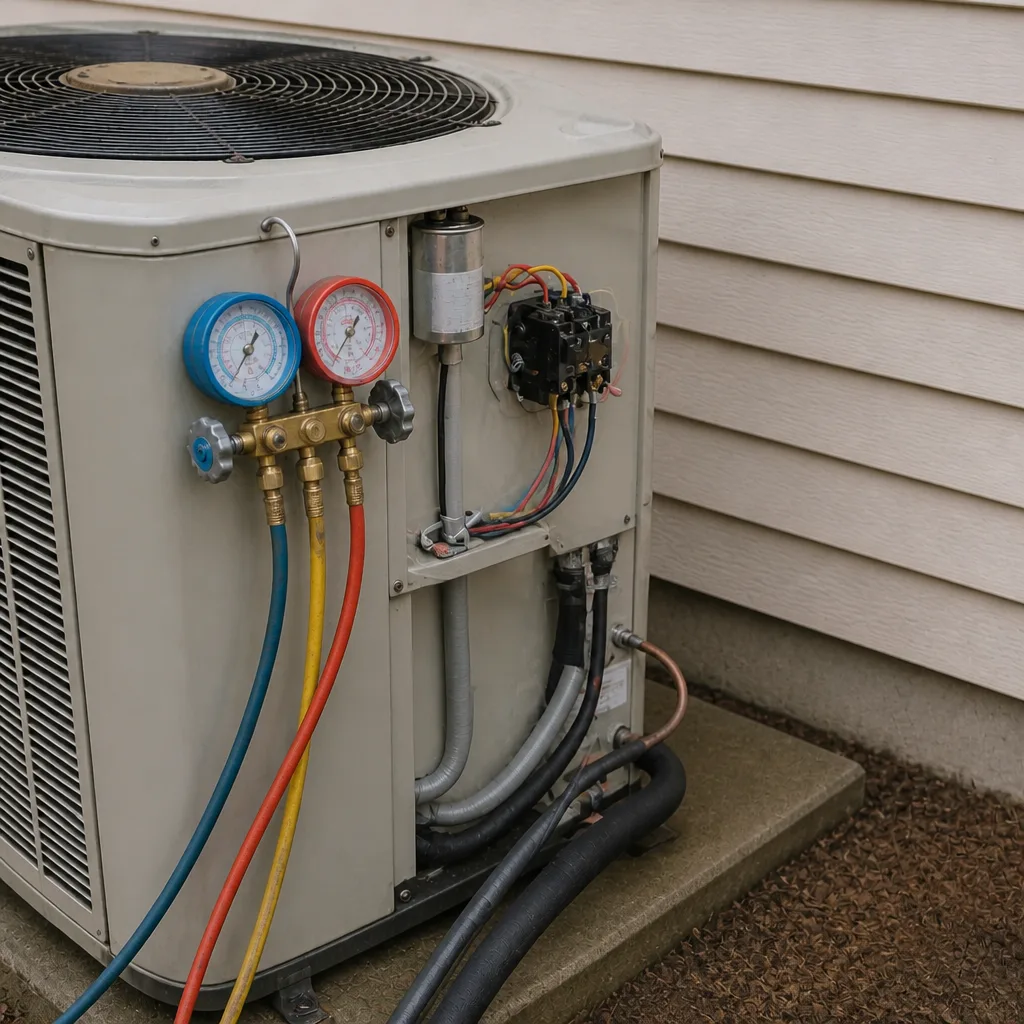
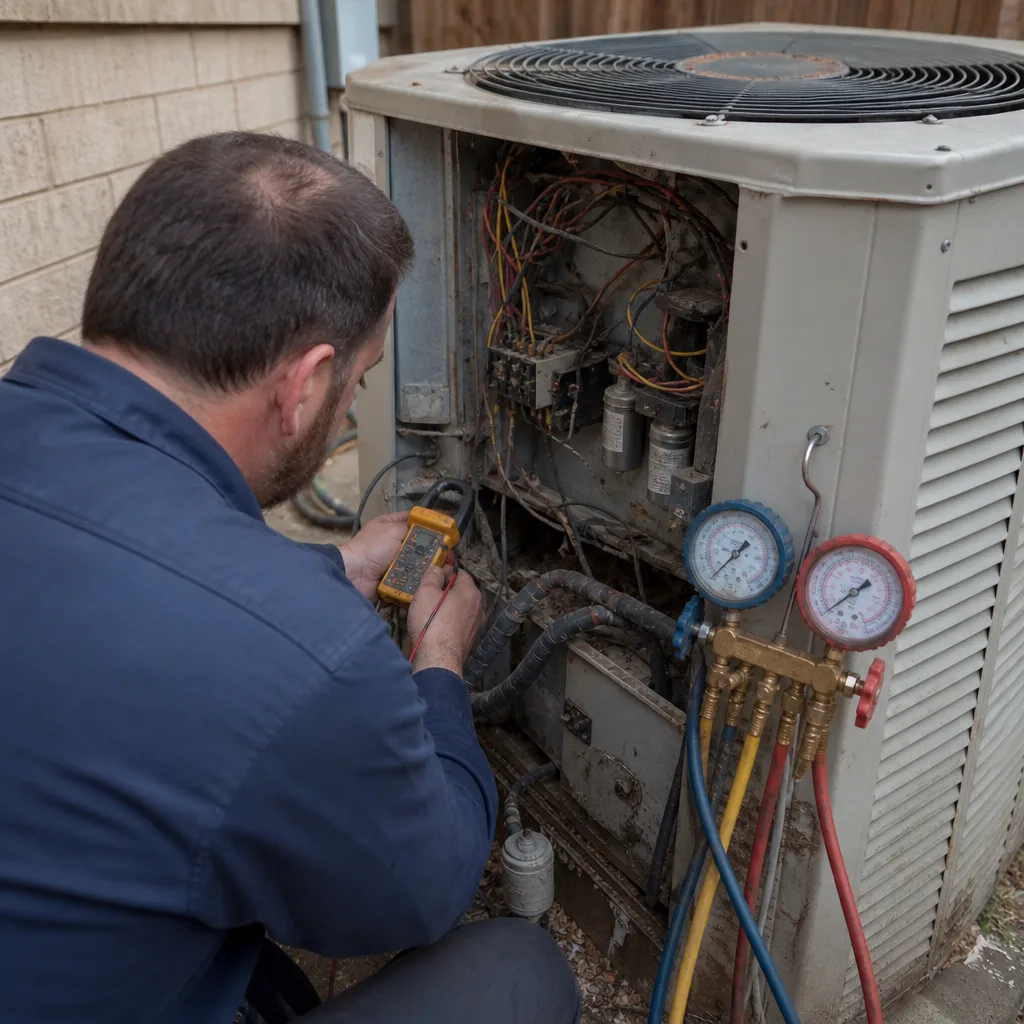
- Compressor amperage (draw): measured at the outdoor unit, compared against the rated amps on the compressor data plate. An upward drift signals a problem with charge, bearings, or electrical supply before the compressor fails outright.
- Temperature split (delta T): the difference between return air temperature and supply air temperature at the air handler. A healthy split is typically in a specific range that depends on the system’s design; the number changes, but the principle doesn’t. A shift in split toward the low end suggests low refrigerant charge or coil fouling.
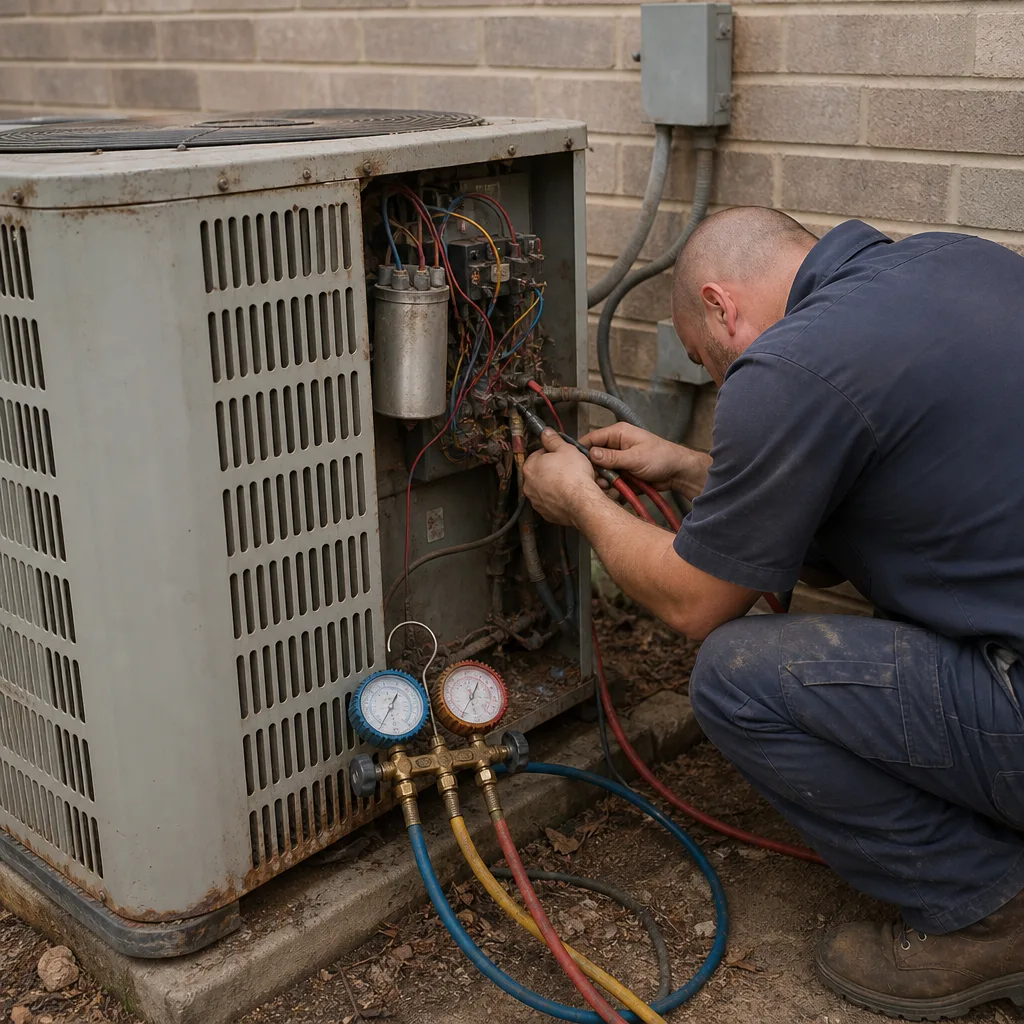
A proper spring tune-up captures both readings, plus capacitor microfarad values and blower motor draw, then writes them down for you. Those are your benchmarks. If someone tells you the system “seems fine” without giving you numbers, you’re not getting a tune-up, you’re getting an oil change. When you have specific readings on file, a mid-summer improvement question or an efficiency complaint becomes a diagnostic rather than a guessing game.
If you’re in a Plano neighborhood where systems run continuously through August, those baseline readings become even more valuable. Homes in areas with heavy tree cover sometimes see a lower split from reduced attic insulation, while homes on exposed lots often see the opposite. The point is to know your system’s individual baseline, not a generic target.
DIY Tasks vs. EPA 608 Work in Texas
One clarification that saves homeowners real trouble: some AC tasks are legitimate DIY, and some are legally restricted. Texas follows the federal refrigerant handling rules, which means any work that touches the sealed refrigerant circuit requires an EPA 608-certified technician. That’s a federal standard, not a state one, and it applies at the homeowner level too.
Tasks you can safely handle yourself:
- Changing the air filter on the schedule above.
- Flushing the condensate drain with vinegar or a wet/dry vac.
- Rinsing the outdoor condenser coil with a garden hose on low pressure.
- Clearing debris (leaves, grass, cottonwood fluff) from around the outdoor unit.
- Visual inspection of refrigerant line insulation for cracking or bare pipe.
- Recording indoor return and supply temperatures with a probe thermometer if you have one.
Tasks that require a certified technician:
- Any refrigerant charge adjustment, recharge, or leak repair.
- Compressor, capacitor, or contactor replacement.
- Evaporator coil cleaning that requires opening the sealed circuit.
- Any task that involves recovering or handling refrigerant gas.
There’s a reason the certifications exist. Refrigerant handling is dangerous and environmentally regulated, and a homeowner attempting it can seriously injure themselves, void warranties, and violate federal law. If a task on your list involves refrigerant, stop and call. That’s why a professional tune-up also comes with a written record: the numbers that matter most are captured by someone qualified to take them.
A Month-by-Month Plano Maintenance Calendar
The order and timing of maintenance tasks matters as much as the tasks themselves. Here’s the calendar we’d recommend for any Plano home with central cooling:
- February: change the filter, check that the outdoor unit is clear of winter debris, and locate your air handler and drain access points if you haven’t recently.
- March: flush the condensate drain, confirm the float switch trips, and schedule the spring tune-up. This is the most important month on the calendar.
- April: full tune-up with baseline amperage and temperature split readings; coil rinse if pollen has collected; insulation audit on exterior lines.
- May: filter change, coil cleaning once cottonwood fluff is visibly coating the fins, and a walk-around of the outdoor unit to clear vegetation.
- June: check filter again, listen for unusual compressor sounds, and confirm the thermostat is holding setpoint on hot afternoons. This is when early diagnosis pays off.
- July-August: filter changes every three to four weeks; light coil rinse after storm debris; watch for puddles near the outdoor unit (a sign of a condensate or drain issue).
- September: post-season rinse, exterior debris clearing, filter change. If the system struggled at all through the summer, this is when to get it looked at.
- October-November: transition to heating season; check furnace function; schedule furnace service if the system has a heating component that hasn’t been serviced since spring.
- December-January: filter changes and a visual inspection. Winters are mild here, so the load is lighter, but the filter still collects dust.
Winter is mild enough in Plano that the heating months don’t impose the same demands as summer. That makes the spring checklist the load-bearing one. Everything in March and April is about preventing the summer failures that would otherwise dominate June. Our Plano neighbors who’ve been through several summers already know the rhythm: reset the system on the calendar, don’t wait for it to fail.
Common Mistakes to Avoid
- Flushing the drain in fall instead of spring. Fall maintenance is fine, but by the time fall arrives the system has already survived the months when the drain most needs to be clear. Move the flush to March, before the humidity spike.
- Skipping coil cleaning because the unit “still works.” A partially fouled coil still cools. It just does it less efficiently, and the extra load shortens component life. Don’t wait for the drop in performance to clean the coil.
- Using a pressure washer on the outdoor coil. Aluminum fins bend easily under a high-pressure nozzle, and once they’re crushed the airflow loss is permanent. Low-pressure rinse only.
- Ignoring refrigerant line insulation because it’s hidden. The exterior run is exposed to direct West Texas sun, and degraded insulation is a slow efficiency leak. Add a visual audit to the yearly list.
- Upgrading to a high-MERV filter without knowing the system can handle it. A restrictive filter can hurt performance. Match filter MERV to the blower design, or talk to a technician before switching.
- Skipping the written tune-up report. If your tune-up doesn’t come with recorded amperage and temperature split numbers, you have no baseline. A verbal “it looks good” isn’t a benchmark.
- Assuming a special brand of technician is required. For systems from York, Daikin, Bryant, American Standard, and most other widely installed brands, the maintenance tasks are the same. The brand label matters more for parts selection than for the routine checklist.
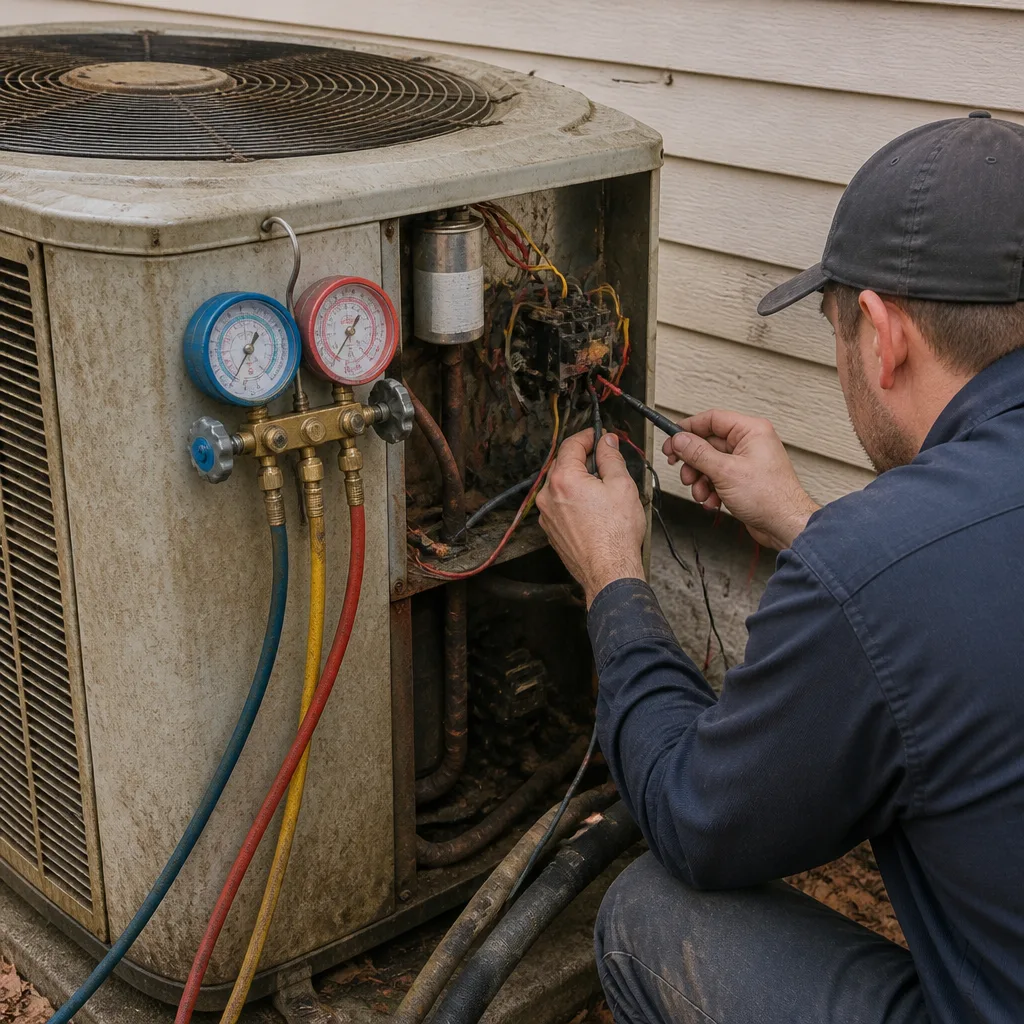
See the difference
 Before
 After
 Before
 After
 Before
 After
When to Call a Professional
Some maintenance steps are everyday. Others belong in trained hands. Call a professional if you hear grinding, screeching, or clicking from the outdoor unit, if the system trips the breaker, if the temperature split has clearly dropped, or if the float switch has shut down the system and the drain still won’t clear after flushing. Call if you find ice on the suction line (a sign of low refrigerant), if the outdoor fan runs but the compressor doesn’t kick in, or if any task on your list involves handling refrigerant. Our technicians have up to 15 years of experience, and we’re certified to service Carrier, Trane, Lennox, Goodman, Rheem, York, Daikin, Bryant, and American Standard systems, so we already know the failure patterns for whatever equipment is in your home. Benchmark AC Repair offers free estimates in Plano – call (833) 488-8546. We answer 24/7. Fast dispatch from 7am to 7pm, Sunday through Friday, and same-day service on most repair calls.
Frequently Asked Questions
Once a year in spring, ideally in March or April before the humidity and heat arrive. A spring tune-up captures the baseline readings and clears the drain and coil while the system is still under low load, so any issues are found before they become summer emergencies. An additional filter-only check in late summer keeps airflow clean through the peak.
You can flush the drain yourself with white vinegar or a wet/dry vac, and it’s one of the most useful DIY tasks on the list. Leave it to a technician if the line won’t clear, if the drain pan is cracked, if a condensate pump needs replacement, or if the float switch has tripped and won’t reset. Call (833) 488-8546 if you’d rather have it done with the tune-up.
Yes. Cottonwood fluff and cedar pollen coat the outdoor condenser coil faster here than in a region with a different pollen profile. The manufacturer’s generic cleaning interval assumes an average climate. In Plano, a peak-season cleaning in late May or early June is often warranted on top of the spring tune-up. Your technician can tell you how fouled the coil actually is after a visual inspection.
No. Refrigerant handling is regulated by federal EPA Section 608 rules, which apply in Texas and every other state. Any work that touches the sealed refrigerant circuit, including recharge, leak repair, and compressor service, requires a certified technician. DIY refrigerant work is dangerous and illegal.
Walk the exterior line set in direct sun and look for cracked, chalky, or missing insulation, and any exposed copper at elbows and fittings. If you can feel cold bare pipe under your fingers, the insulation has failed. Schedule replacement before summer load arrives. Call (833) 488-8546 if you want a technician to inspect the line set during your tune-up.
Yes. Recorded compressor amperage, capacitor microfarad values, and temperature split readings give you a baseline that turns any mid-season concern into a real diagnosis. Without those numbers, a technician can only tell you the system “seems fine.” When you have your system’s actual benchmarks on file, you’ll know the moment performance starts drifting.
In most cases, yes. The routine maintenance tasks – drain flush, coil cleaning, insulation audit, filter and blower work, baseline readings – are largely the same across the major residential brands. Benchmark AC Repair is certified on Carrier, Trane, Lennox, Goodman, Rheem, York, Daikin, Bryant, and American Standard, and those cover the vast majority of Plano homes. Call (833) 488-8546 and we’ll confirm before booking.
The Bottom Line
The right maintenance checklist for a Plano home is less about how many tasks you complete and more about when you complete them. Flush the drain in March, before the humidity arrives. Time coil cleaning to the cottonwood and cedar pollen calendar, not the generic manufacturer schedule. Audit the sun-exposed refrigerant line insulation every year. Change filters on time, log baseline amperage and split readings in spring, and leave anything that touches the sealed refrigerant circuit to a certified technician. Do those things in that order and the emergency call that so often defines June becomes rare instead of routine. For brand-neutral service on the equipment you already own, Benchmark AC Repair offers free estimates in Plano – call (833) 488-8546.
Written by the team at Benchmark AC Repair.